推演中
← 14 Main Stars Wiki
Star Wiki
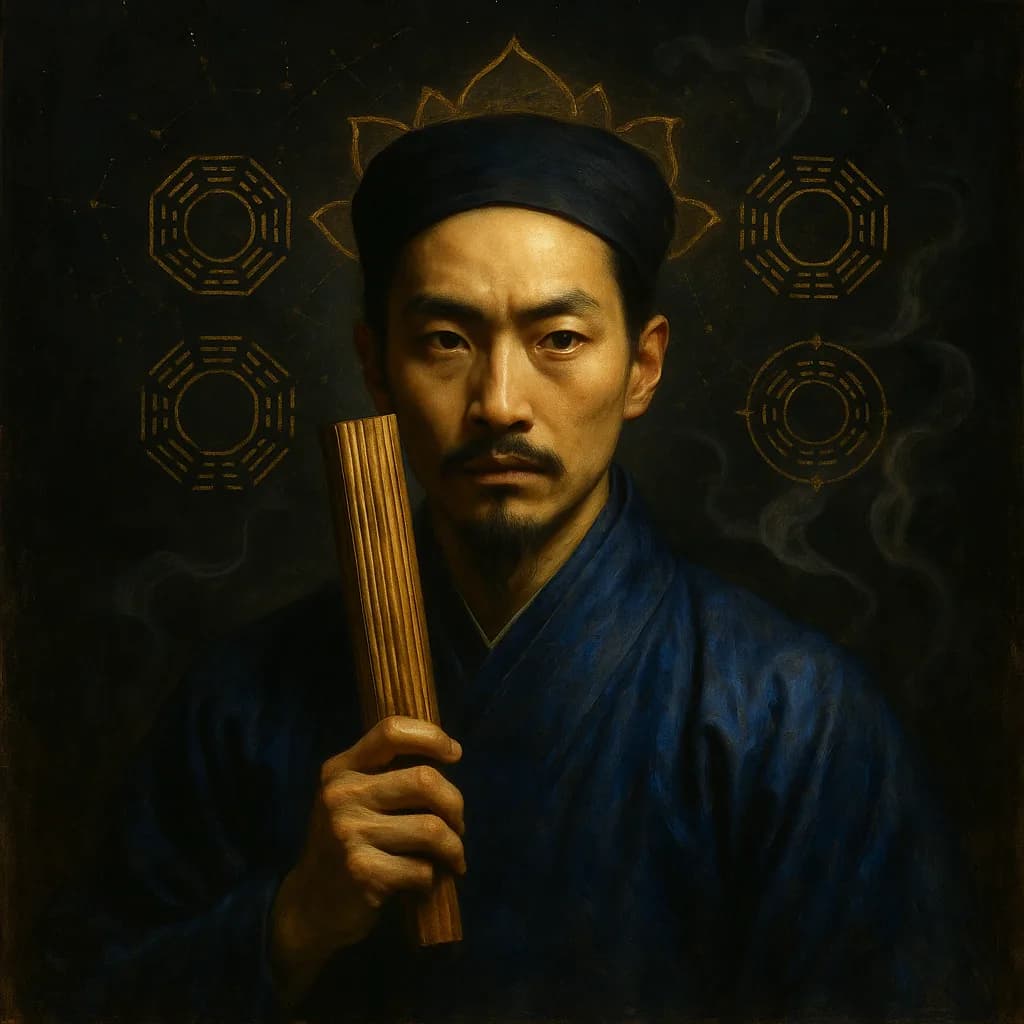
Tian Ji
天机 · The Strategist
TIANJI 天机 · The Strategist
✦ In our 24,000-chart uniform simulation, 8.6% had The Strategist in the Self Palace
Paste it in your bio
Tian Ji is a traditional Zi Wei Dou Shu archetype associated with pattern recognition, strategy, and adaptation. Its useful tension: seeing several routes can improve a plan; constant revision can delay the decision the plan was meant to support.
What is Tian Ji (The Strategist)?
Traditional symbolic association: pattern recognition, strategy, and adaptation. This describes an interpretive archetype—not a validated personality test, diagnosis, or fixed prediction.
What is the Tian Ji personality like?
Pattern hypothesis: strategy and adaptation. Treat this as a prompt to investigate repeated choices, not as a fixed personality label.
Strengths
- · Potential asset to test: spots patterns, options, and second-order effects before acting.
- · Evidence prompt: identify one recent situation where this style improved the outcome, and name the observable behavior that helped.
Watch-outs
- · Shadow to watch: can keep revising the plan after a decision is needed.
- · Accuracy check: find one clear counterexample. If the pattern does not repeat across contexts, do not treat it as a defining trait.
Traditional archetype summary · modern English interpretation. Compare these patterns with lived behavior; this is not a verified quotation, diagnosis, or fixed prediction.
In the Self Palace
When Tian Ji is read in the Self palace, notice where seeing several routes can improve a plan and where constant revision can delay the decision the plan was meant to support. Try: compare the pattern across two real situations and name one exception. Accuracy check: Does another option improve the decision, or only postpone commitment?
What does Tian Ji mean across the 12 palaces?
The same main star means different things depending on which palace it falls in — each palace is a different area of life. Below is what this star signifies in each of the 12 palaces, a per-palace index you can cross-check against your own chart.
When Tian Ji is read in the Self palace, notice where seeing several routes can improve a plan and where constant revision can delay the decision the plan was meant to support. Try: compare the pattern across two real situations and name one exception. Accuracy check: Does another option improve the decision, or only postpone commitment?
Tian Ji in the siblings palace is traditionally read through peer roles, sibling dynamics, and shared boundaries. Notice where seeing several routes can improve a plan and where constant revision can delay the decision the plan was meant to support. Try: name the role you usually take and ask whether support is reciprocal. This placement cannot predict a sibling's character, closeness, status, or future.
In close relationships, you may process emotion by analysing it, while the other person may first need presence rather than a solution. This describes a recurring interaction to test against lived experience; it does not determine fidelity, relationship count or who someone should be with. Potentially complementary qualities include people who welcome curiosity while helping decisions become concrete. Compatibility depends on behaviour, values, safety and communication—not a main-star label alone.
Traditional Zi Wei uses the Children palace as a symbolic lens for caregiving, creative work, juniors and legacy. With Tian Ji here, compare the archetype's strengths and watch patterns with how you actually guide growth. It cannot predict fertility, family size, or a future child's health, sex or personality.
For the Tian Ji archetype, information and optionality can feel safer than commitment, which helps research but can delay a workable decision. Use this as a decision-pattern check, not as a forecast of income, wealth or investment returns. Explore environments such as strategy, research, product, systems design, planning and work that rewards synthesis. Treat these as hypotheses to test against your skills, responsibilities, access and the actual market—not as a career prescription.
Traditional Zi Wei health links are symbolic rather than clinical. For Tian Ji, the useful pattern to test is whether mental activity crowds out sleep, meals, movement or a clear stopping time. Compare that with your lived experience; it is not a prediction of an organ, condition or diagnosis. Start with sustainable sleep, movement, meals, recovery and social support. Base screening, supplements and treatment on your age, history and advice from qualified health professionals—not on a star.
Tian Ji in the travel palace is traditionally read through how you respond to unfamiliar environments and changing context. Notice where seeing several routes can improve a plan and where constant revision can delay the decision the plan was meant to support. Try: compare one setting that expands the pattern with one that distorts it. This placement cannot predict relocation success, foreign opportunity, accidents, or a fixed destination.
Tian Ji in the friends palace is traditionally read through networks, collaboration, trust, and social boundaries. Notice where seeing several routes can improve a plan and where constant revision can delay the decision the plan was meant to support. Try: identify where contribution and reciprocity are both visible. This placement cannot predict who will help, betray, elevate, or remain loyal.
At work, you spot patterns and alternate routes quickly; value rises when analysis ends in a clear experiment or recommendation. The useful accuracy check is whether this pattern appears consistently across different teams, not whether one flattering description feels familiar. Possible settings to investigate: strategy, research, product, systems design, planning and work that rewards synthesis. Compare them with your experience, qualifications, constraints and opportunities before making a career decision.
Tian Ji in the property palace is traditionally read through home, security, stewardship, and attachment to place. Notice where seeing several routes can improve a plan and where constant revision can delay the decision the plan was meant to support. Try: review one practical household or ownership assumption with real costs and constraints. This placement cannot predict property ownership, inheritance, household wealth, or a purchase date.
Tian Ji in the fortune palace is traditionally read through inner life, rest, meaning, and private attention. Notice where seeing several routes can improve a plan and where constant revision can delay the decision the plan was meant to support. Try: notice which practice restores capacity and which one only numbs discomfort. This placement cannot predict happiness, spiritual attainment, luck, or mental-health outcomes.
Tian Ji in the parents palace is traditionally read through authority, inherited expectations, care, and intergenerational roles. Notice where seeing several routes can improve a plan and where constant revision can delay the decision the plan was meant to support. Try: separate what was learned from what you now choose to continue. This placement cannot predict a parent's health, lifespan, status, support, or relationship outcome.
The Four Transformations
Your birth year decides how this star 'transforms' (into wealth, power, status, or affliction) — the key that drops a star's energy onto the specific themes of your life.
Tian Ji × Hua Lu — ProsperityResources, affinity and receptivity
Chart fact: your birth-year places Prosperity (Lu) on Tian Ji. Tradition uses Lu to examine how support, opportunity and value circulate. With Tian Ji, that lens works through pattern recognition, adaptability and strategic curiosity. It is an interpretive pattern, not a forecast of wealth, rank, health or a specific event. Accuracy check: Where does this strength create a real exchange—and where is it only unused potential?
Key move
Choose one resource channel to strengthen, define the evidence you expect, and review it before making a larger commitment.
METHOD NOTE · Method note: traditional Four Transformations interpretation; modern English reflective summary.
Tian Ji × Hua Quan — PowerAgency, responsibility and influence
Chart fact: your birth-year places Power (Quan) on Tian Ji. Tradition uses Quan to examine where decisions, pressure and responsibility concentrate. With Tian Ji, that lens works through pattern recognition, adaptability and strategic curiosity. It is an interpretive pattern, not a forecast of wealth, rank, health or a specific event. Accuracy check: When does your influence improve the outcome, and when does it become control?
Key move
Take ownership of one bounded decision, state the success measure, and ask the people affected for feedback.
METHOD NOTE · Method note: traditional Four Transformations interpretation; modern English reflective summary.
Tian Ji × Hua Ke — RecognitionLearning, legibility and reputation
Chart fact: your birth-year places Recognition (Ke) on Tian Ji. Tradition uses Ke to examine how expertise becomes visible and trusted. With Tian Ji, that lens works through pattern recognition, adaptability and strategic curiosity. It is an interpretive pattern, not a forecast of wealth, rank, health or a specific event. Accuracy check: What do people already seek your judgment on—and what proof supports that trust?
Key move
Publish or present one useful piece of work, then improve it from specific audience feedback.
METHOD NOTE · Method note: traditional Four Transformations interpretation; modern English reflective summary.
Tian Ji × Hua Ji — FrictionAttachment, repetition and a pressure point
Chart fact: your birth-year places Friction (Ji) on Tian Ji. Tradition uses Ji to examine a pattern that consumes attention until it is handled more consciously. With Tian Ji, that lens works through pattern recognition, adaptability and strategic curiosity. It is an interpretive pattern, not a forecast of wealth, rank, health or a specific event. Accuracy check: Which trigger repeats here, and what do you usually do next?
Key move
Name the trigger, your default reaction and one replacement behavior you can practice this week.
METHOD NOTE · Method note: traditional Four Transformations interpretation; modern English reflective summary.
Which stars pair best with Tian Ji?
Which stars bring out the best in this one? Tap a pairing for the full read, or chart the two of you together.

 Tian Ji × Tian LiangHeaven-madeThe Strategist × The Elder — when two wise minds marry, what could go wrong?
 Tian Ji × Tai YangStrong matchThe Strategist × The Sun — different roads, same heartbeat?
 Zi Wei × Tian JiStrong matchThe Emperor × The Strategist — different roads, same heartbeat?
 Tian Ji × Tian TongEffort requiredThe Strategist × The Blessing — falling is easy. Staying?
Famous Archetypes
Figures who embody Tian Ji Strategist energy — their success came from seeing connections others missed:
- 诸葛亮 / Zhuge Liang
First-strategist of the Three Kingdoms era.
- 张良 / Zhang Liang
Sage advisor who helped found the Han dynasty.
- Warren Buffett
Master of information edge and patient strategy.
- Henry Kissinger
Strategic mastermind of 20th-century diplomacy.
Frequently Asked Questions
What does the Tian Ji star mean?
Tian Ji is traditionally associated with pattern recognition, strategy, and adaptation. Use that as an archetype to compare with observable behavior, not as a fixed trait or event prediction. Accuracy check: Does another option improve the decision, or only postpone commitment?
Is it good to have Tian Ji in the Self palace?
Tian Ji is traditionally associated with pattern recognition, strategy, and adaptation. Use that as an archetype to compare with observable behavior, not as a fixed trait or event prediction. Accuracy check: Does another option improve the decision, or only postpone commitment?
What careers suit Tian Ji?
Tian Ji is traditionally associated with pattern recognition, strategy, and adaptation. Use that as an archetype to compare with observable behavior, not as a fixed trait or event prediction. Accuracy check: Does another option improve the decision, or only postpone commitment?
Who is Tian Ji most compatible with?
In close relationships, you may process emotion by analysing it, while the other person may first need presence rather than a solution. This describes a recurring interaction to test against lived experience; it does not determine fidelity, relationship count or who someone should be with. Potentially complementary qualities include people who welcome curiosity while helping decisions become concrete. Compatibility depends on behaviour, values, safety and communication—not a main-star label alone.
Why does Tian Ji overthink so much?
Tian Ji is traditionally associated with pattern recognition, strategy, and adaptation. Use that as an archetype to compare with observable behavior, not as a fixed trait or event prediction. Accuracy check: Does another option improve the decision, or only postpone commitment?
What does 'Tian Ji transforms into benevolence' mean?
Tian Ji is traditionally associated with pattern recognition, strategy, and adaptation. Use that as an archetype to compare with observable behavior, not as a fixed trait or event prediction. Accuracy check: Does another option improve the decision, or only postpone commitment?
Is Tian Ji your main star?
Enter your birth time for a complete chart, free — main star, secondary stars, 12 palaces, four transformations, decade cycles, all in one read. This is your first look at your own chart.
Get my free chart →THE 14 MAIN STARS · iOS APP
Keep your chart in your pocket
A fresh chart-based prompt for love, work and momentum — ready each morning.
The web is a first read. The app keeps your saved charts, daily symbolic prompts, family charts and compatibility readings together — without re-entering birth details.
- A fresh daily chart brief
- Compatibility & family charts
- Keep your saved charts together
- Daily themes on your home screen
- Your full chart history, any time
The 14 Main Stars App · Coming soon
Leave your email — we'll notify you the moment it's on the App Store.
One launch email · no spam
Free · iPhone · your charts, synced
Classical Foundation
Not AI-generated content — every interpretation is grounded in 15 classical texts, sources verifiable. Charts follow fixed calculation rules; the source library and methodology are open for inspection.
Reference library: 《紫微斗数全书》 · 《十八飞星策天紫微斗数》 · 《紫微斗数全集》 · 《紫微斗数捷览》 and other traditional texts
Zi Wei Dou Shu and BaZi are traditional symbolic systems, not scientifically verified prediction. Use a reading as a prompt for reflection and reality-checking — never as a substitute for medical, legal, financial, employment or relationship decisions.
View all sources →